Mission & Instrument
Mission
Table 1. ECOSTRESS Mission Characteristics
| Parameter | Value |
|---|---|
| Launch Vehicle | SpaceX 15 |
| Launch Date | June 29, 2018 @ 5:42am, 42sec EDT (9:42:42 UTC) |
| Mission Extension | One year 2019-2020, with proposal to extend mission additional years pending senior review. |
| Data coverage | CONUS, twelve 1,000 x1,000 km key climate zones and twenty-five Fluxnet sites for all opportunities. |
| Data collection | On average 1 hour of science data per day |
| Payload mass | 490 kg |
| Payload power | 516 W |
The ECOSTRESS radiometer has been deployed on International Space Station (ISS) on the Japanese Experiment Module - External Facility (JEM-EF) site 10. At this location, the radiometer scan is perpendicular to the ISS velocity
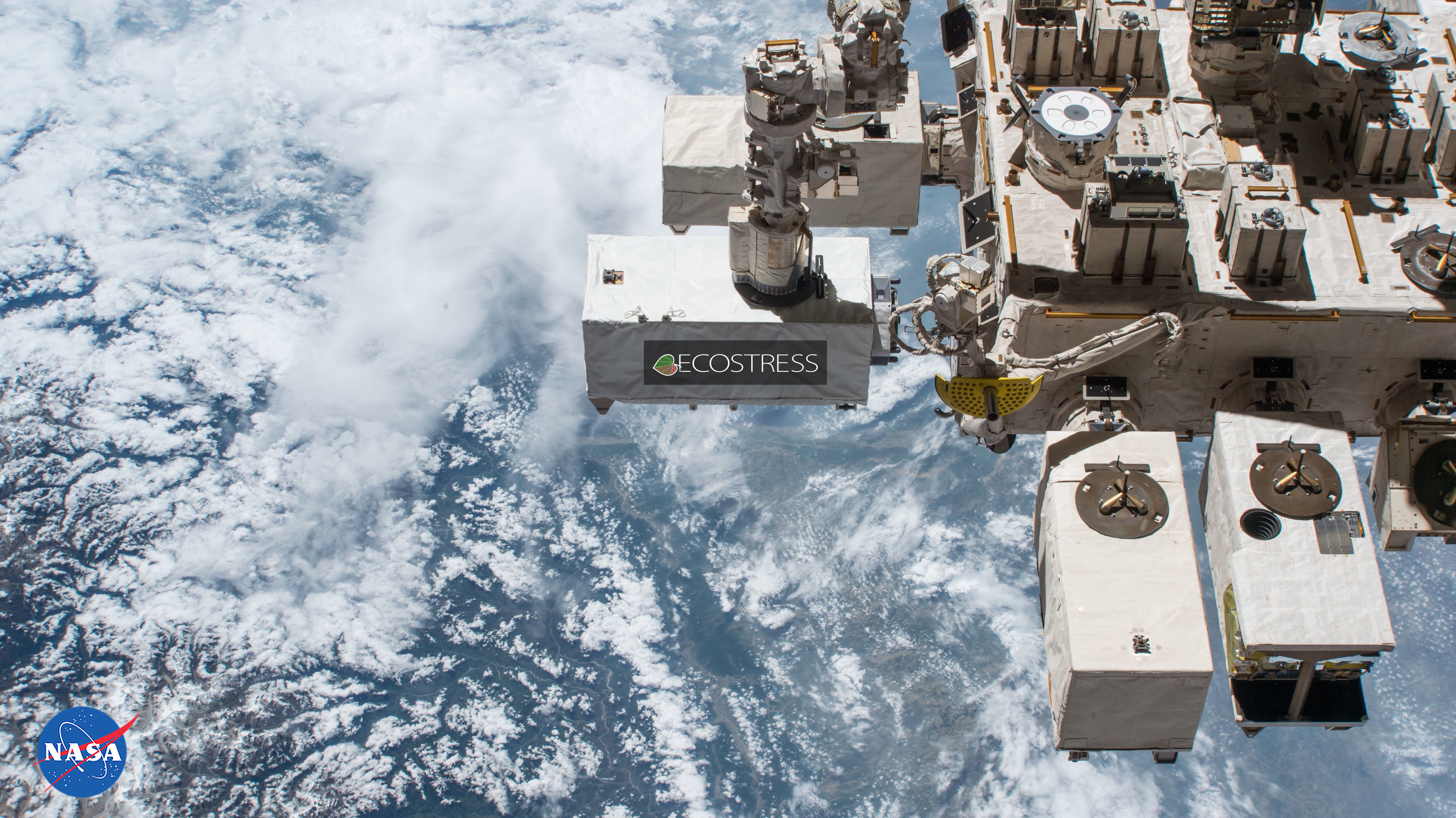
Figure 1. Japanese Experiment Module on International Space Station
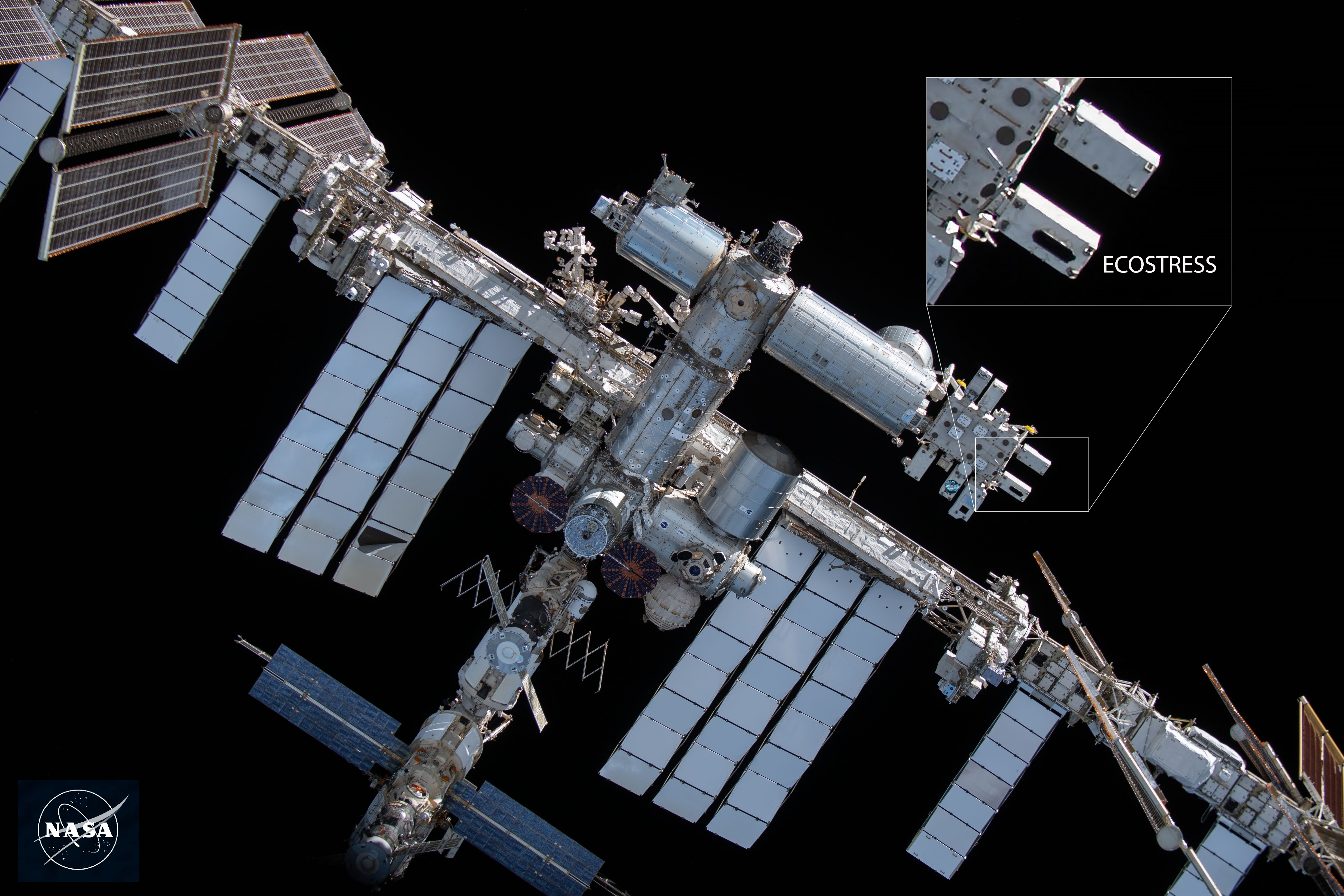
Figure 2. ECOSTRESS seen from underneath on ISS
The ISS was photographed by ESA astronaut Thomas Pesquet from Crew Dragon Endeavour after undocking. Pesquet, NASA astronauts Shane Kimbrough and Megan McArthur, and JAXA astronaut Aki Hoshide executed a fly around maneuver to take pictures of the orbiting laboratory before returning to Earth after 199 days in space as part of Expeditions 65 and 66. Also posted here: https://www.flickr.com/photos/nasa2explore/sets/72157720187084178/
The International Space Station is pictured from the SpaceX Crew Dragon Endeavour during a flyaround of the orbiting lab that took place following its undocking from the Harmony module’s space-facing port on Nov. 8, 2021. ECOSTRESS can be seen in the zoomed in picture-in-picture.
Instrument
The ECOsystem Spaceborne Thermal Radiometer Experiment on Space Station (ECOSTRESS) will be implemented by placing the existing space-ready Prototype HyspIRI Thermal Infrared Radiometer (PHyTIR) on the International Space Station (ISS) and using it to gather the measurements needed to address the science goals and objectives. PHyTIR was developed under the Earth Science Technology Office (ESTO) Instrument Incubator Program (IIP). From the ISS, PHyTIR will provide data with 38-m in-track by 69-m cross-track spatial resolution (science requirement is 100 m) and predicted temperature sensitivity of ≤0.1 K (science requirement is 0.3 K). The ISS orbit allows excellent coverage of the selected targets including diurnal coverage. The existing hardware was developed to reduce the cost and risk for the thermal infrared radiometer on the future Hyperspectral Infrared Imager (HyspIRI) mission, A double-sided scan mirror, rotating at a constant 25.4 rpm, allows the telescope to view a 53°-wide nadir cross-track swath as well as two internal blackbody calibration targets every 1.29 seconds (Note that the two-sided mirror rotating at 25.4 rpm provides 46.6 sweeps per minute). The optical signal is focused by a telescope onto the 65 K focal plane containing a custom 13.2-μm-cutoff mercury-cadmium-telluride (MCT) infrared detector array. Spectral filters on the focal plane define 5 spectral bands in the 8-12.5 μm range and an additional band at 1.6 um for geolocation and cloud detection (six bands total). The focal plane is cooled by two commercial Thales cryocoolers. Electronics consist of six build-to-print and four commercial boards. Heat rejection for the ECOSTRESS cryocoolers and electronics is provided by the cooling fluid loop on the ISS Japanese Experiment Module External Facility (JEM-EF). ECOSTRESS can fit any of the nine JEM-EF payload locations but will be deployed at Site 10 (one of the two end locations).
Table 2. ECOSTRESS Radiometer Characteristics
| Description | Value | Unit | Notes |
|---|---|---|---|
| Number of spectral bands | 6 | ||
| Measured band centers | Band 1 - 8.29, *Band 2 - 8.78, Band 3 - 9.20, *Band 4 - 10.49, *Band 5 - 12.09 | µm |
May 15 2019, - May 17, 2023, Three Band data Transition April 28, 2023 - May 17, 2023, Three and Five Band data May 18, 2023 - Present, Five Band data only mode |
| Measured FWHM per band | Band 1 - 0.354, Band 2 - 0.310, Band 3 - 0.396, Band 4 - 0.410, Band 5 - 0.611 | µm | |
| Pixel size at nadir | 69x38 | m | 2 pixels in cross track and 1 pixel in down track |
| Swath width | 384 | km | varies with ISS height, assumes height of 400 km |
| Scene size | 5400 x 5632 | pixels | |
| Nominal Radiometric accuracy at 300K | 0.5 | K | typical value varies with wavelength of band |
| Nominal Radiometric precision at 300K | 0.15 | K | typical value varies with wavelength of band |
| Radiometric precision at 300K per band | 0.21,0.13,0.10,0.10,0.29 | K | measured values (TVAC) |
| Number of blackbodies | 2 | One controlled between 16C to 24C, One controlled to 46C | |
| Hot blackbody temperature | 46 | C | The scanning sequence is hot bb, cold bb, earth scene repeating |
| Cold blackbody temperature | 20 | C | The scanning sequence is hot bb, cold bb, earth scene repeating |
| Dynamic range | 200-435 | K | varies with spectral band, 12um band saturates at the highest temperature (excluding the SWIR) |
| Aperture size | 200 | mm | |
| F-number | 2.1 | ||
| Detector readout rate | <10 | MHz | per channel, 32 total channels |
| Scan speed | 25.4 | rpm | |
| Scan angle | +/- 25 | degrees | |
| Detector Array size | 10.24 | mm2 | Sparse array |
| Downlink rate | 4.5 | Mbps | Transmission rate is fixed at 10 Mbps (firmware limitation) |
| Scene size | 44 | swaths | 9.8km x 384km =3D 1 swath |
| Number of scenes | 16 | assuming one per orbit | |
| Focal plane temperature | 65 | K | |
| Housing temperature | 120 | K | |
| Number of cyrocoolers | 3 | Pulse tube, < 500W | |
| IFOV | 96 | µrads |